Centrifugal Disc vs Centrifugal Barrel Finishing: Which High-Energy Machine Fits Your Parts?
High-energy mass finishing comparison • Centrifugal disc & centrifugal barrel • Machine selection guide
When vibratory finishing is too slow or too gentle for the result you need, the next step up in intensity is a centrifugal disc or a centrifugal barrel machine. Both multiply the effective force between media and parts, cutting cycle times dramatically on small, hard-to-finish components. But they reach that intensity in different ways — and that difference decides which machine suits your parts, batch sizes, and floor space.
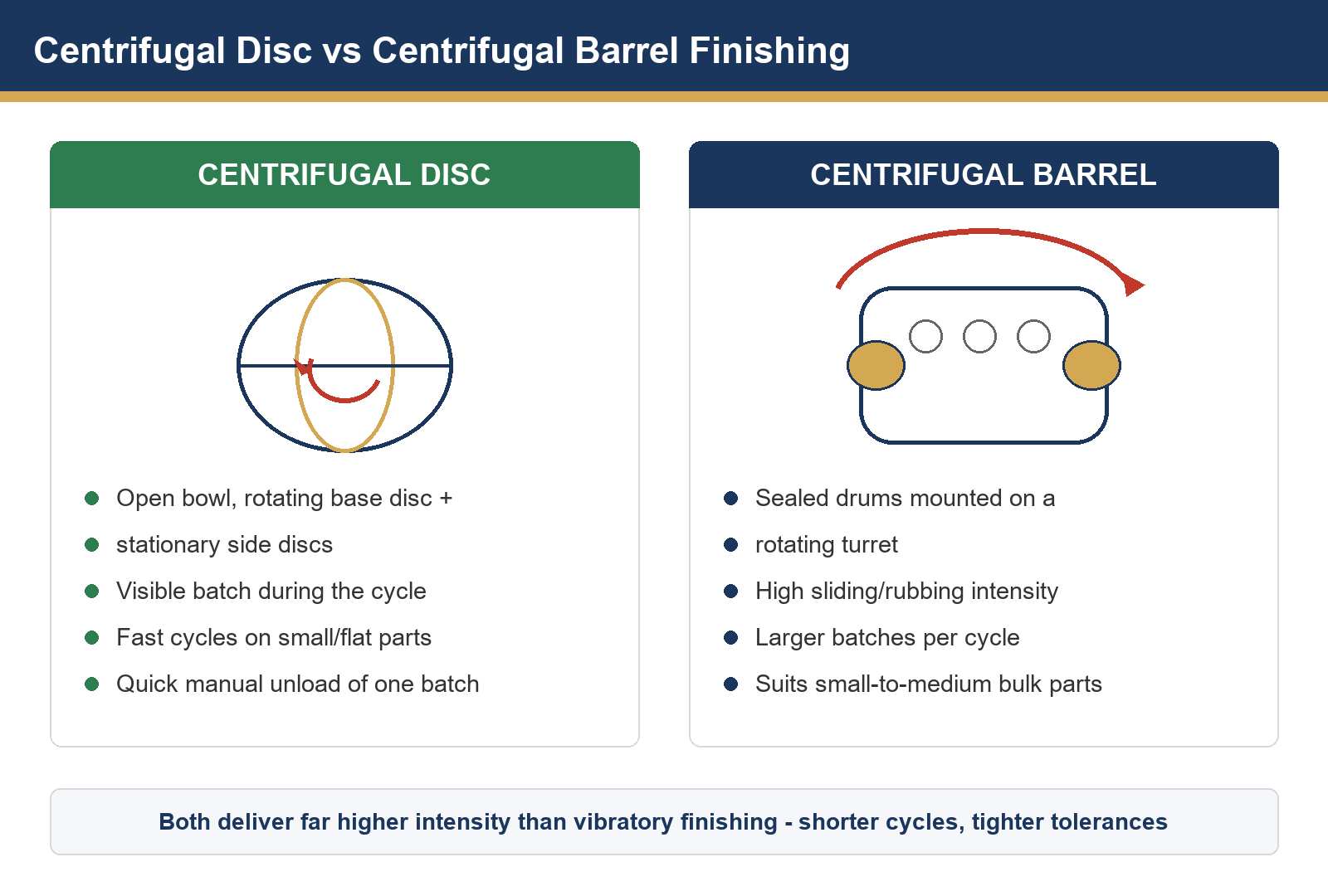
In one sentence. Centrifugal disc = fastest cycles with the batch always visible and easy to check; centrifugal barrel = the most intense sliding action with larger sealed batches. Both are the tools of choice when vibratory bowls would take hours to reach the same result.
1. Why High-Energy Finishing Exists
Vibratory finishing is gentle and forgiving, but its abrasive action is limited by low contact pressure. Small or hard parts — fasteners, watch components, medical screws, precision gears, jewelry castings — often need far more rubbing energy to deburr, smooth, or pre-polish in a commercially acceptable time. Centrifugal machines solve this by spinning the process mass so that media presses against parts at many times the force gravity alone can provide, multiplying the rate of surface refinement while keeping the process controllable and repeatable.
2. How a Centrifugal Disc Machine Works
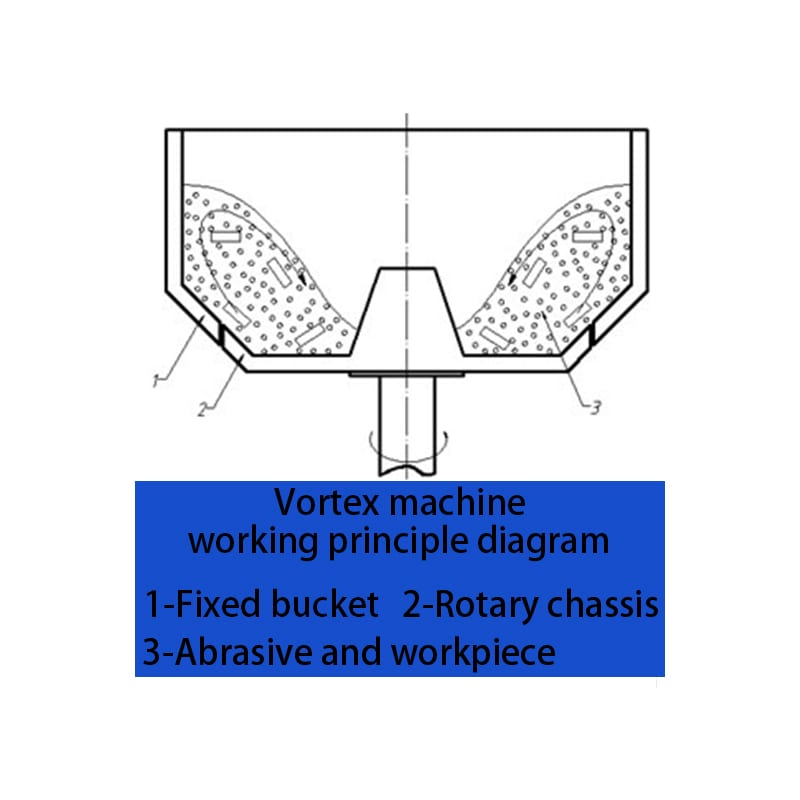
A centrifugal disc machine is an open bowl with a powerful rotating disc at its base and stationary side discs or ribs. The base disc spins at high speed, setting media and parts into a toroidal (ring-shaped) rolling motion; the stationary sides force constant speed differences, so every part is continuously rubbed from all directions. Because the bowl is open, the operator can watch the batch, open the lid mid-cycle, and take out sample parts in seconds. Unloading is typically a tilt of the bowl or a bottom discharge door, by media separation on a screening tray.
3. How a Centrifugal Barrel Machine Works
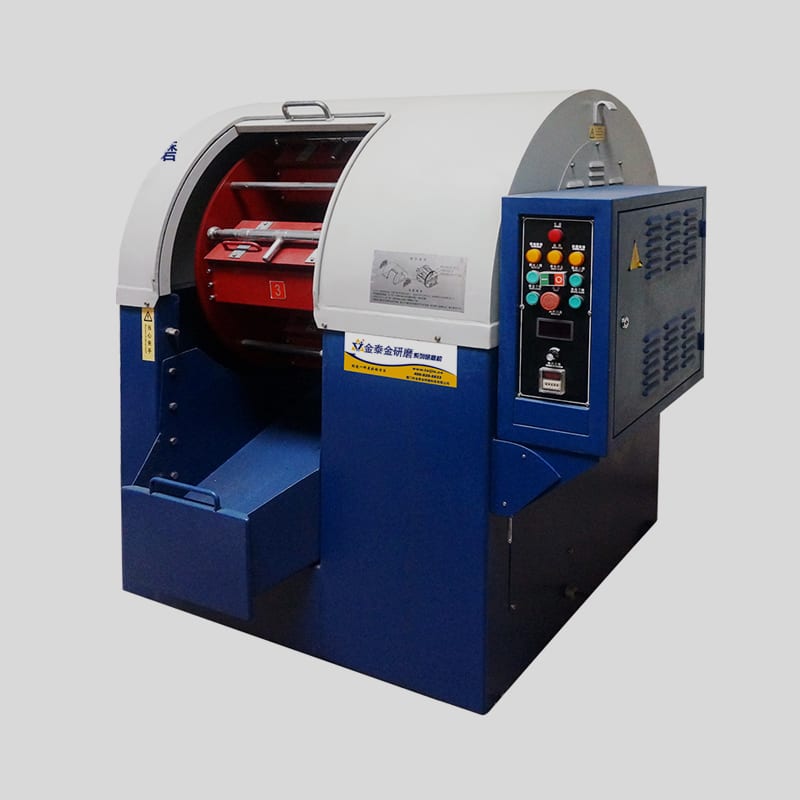
A centrifugal barrel machine mounts several sealed drums onto a rotating turret. As the turret spins, each drum also rotates on its own axis, so media and parts are held against the drum wall by centrifugal force and then continuously slide down the rising “shoulder” of the charge. This produces the most intense sliding/rubbing action of any batch mass-finishing process. The drums are sealed, so the process is quiet and clean; between cycles the drums swing out for loading, and finished batches are discharged through drum doors onto a separator.
4. Side-by-Side Comparison
| Feature | Centrifugal Disc | Centrifugal Barrel |
| Working principle | Open bowl, spinning base disc + stationary side discs | Sealed drums on a rotating turret (planetary motion) |
| Batch visibility | Fully visible; samples removable mid-cycle | Sealed — check only at cycle end |
| Action character | Rolling toroidal flow; aggressive but controllable | Maximum sliding/rubbing intensity |
| Batch size | Small to medium | Medium to larger (sum of all drums) |
| Unloading | Bowl tilt or bottom door, quick manual discharge | Drum doors discharge onto separator |
| Typical parts | Small flat/short parts: fasteners, stampings, jewelry, watch parts | Small-to-medium bulk parts: gears, machined blanks, castings |
| Process control | Speed adjustable; visual process monitoring | Turret and drum speeds adjustable; fully enclosed |
5. Which Parts Fit Which Machine
- Choose centrifugal disc when: you need the shortest possible cycles on small parts, want to inspect or sample the batch during the run, or change part types frequently. Ideal for jewelry, watch cases, small stampings, and electronics hardware.
- Choose centrifugal barrel when: you need maximum smoothing or pre-polish intensity on robust small-to-medium parts in larger batches — machined blanks, forged or cast components, dental and medical implants (with validated processes), and cutting-tool blanks.
- Stay with vibratory when: parts are larger, fragile, or decorative surfaces must not mark each other — see our guide on choosing ceramic vs plastic media for gentler options.
6. Media and Compound Notes
High-energy machines demand media that can take the extra force: precision-fired ceramic for aggressive cutting, plastic-bonded media for softer metals, and steel media where burnishing without material removal is the goal. Compound dosing is typically continuous or metered rather than batch-charged. Because contact pressure is much higher than in vibratory work, always run a dimension check on a sample batch before production — aggressive processes can move tolerances on thin or delicate features.
7. Selection Checklist and Next Step
- Define the objective: deburr, edge radius, surface refine, or pre-polish — and the target roughness if specified.
- Measure the part: smallest feature, thinnest section, and whether parts can touch each other.
- Size the batch: daily throughput decides whether a disc machine’s fast small batches or a barrel machine’s larger sealed batches fit better.
- Run a sample trial: send parts for a timed trial on both machine types and compare finish, cycle time, and dimensional change before buying.
Browse our centrifugal disc finishing machines and centrifugal barrel finishing machines, or view the full finishing machine collection to compare all options.
Disc or barrel? Let your parts decide.
Send sample parts and your finish target. Our team will run comparative trials and recommend the machine, media, and cycle with real results.
Contact Our Finishing TeamOfficial website: www.surface-polish.com | Support email: info@surface-polish.com
 +86-592-2381506


 Rete IPv6 supportata