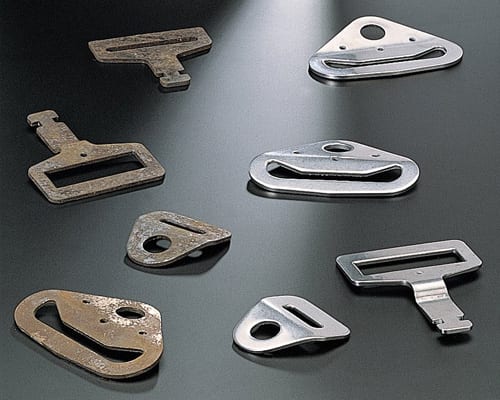
Lo stampaggio, la tranciatura, la punzonatura e la tranciatura fine possono lasciare una bava rialzata sul lato matrice di un componente. La bava può interferire con l'assemblaggio, danneggiare un rivestimento, creare un rischio nella manipolazione o impedire il corretto posizionamento di un pezzo. La finitura in massa può rimuovere bave leggere e moderate da grandi lotti, ma inserire semplicemente pezzi sottili in una macchina aggressiva può sostituire un difetto con diversi nuovi problemi.
I pezzi piatti possono impilarsi e schermarsi a vicenda. Le clip aperte possono agganciarsi tra loro. Gli stampati lunghi e stretti possono piegarsi. Le superfici estetiche possono sfregare l'una contro l'altra, mentre i piccoli fori possono intrappolare materiale abrasivo usurato. Un processo affidabile dipende quindi dall'intero sistema: condizione iniziale della bava, geometria del pezzo, movimento della macchina, forma del materiale abrasivo, rapporto di carico, flusso del composto, separazione e ispezione.
Iniziare dalla bava, non dalla macchina
La dimensione e la direzione della bava determinano se la finitura in massa è appropriata. Una bava sottile ed esposta generalmente risponde in modo più prevedibile rispetto a un bordo spesso rullato o a una bava nascosta all'interno di una caratteristica stretta. Prima della prova, registrare dove si trova la bava, come varia nel lotto e quali bordi devono rimanere affilati o controllati dimensionalmente.
| Condizione in ingresso | Potenziale della finitura in massa | Punto principale di validazione |
|---|---|---|
| Bava leggera esposta da stampaggio | Solitamente un candidato ideale | Rottura del bordo richiesta e tempo ciclo |
| Rondella o spessore piatto sottile | Possibile con carico controllato | Impilamento, piegatura e ostruzione dei fori |
| Clip aperta o pezzo a forma di molla | Richiede una prova contro i grovigli | Aggancio, forza di apertura e deformazione |
| Forte ricalcatura o bordo strappato | Potrebbe richiedere una precedente fase di taglio | Se il difetto può essere rimosso senza arrotondare eccessivamente |
| Bordo critico di tenuta o posizionamento | Utilizzare condizioni conservative | Capacità dimensionale dopo la finitura |

Perché i pezzi stampati si aggrovigliano, si impilano o si deformano
L'interazione tra pezzi è spesso il fattore limitante. Un processo può rimuovere correttamente la bava producendo però un numero inaccettabile di pezzi piegati o segnati. I seguenti rischi devono essere testati separatamente invece di essere raggruppati sotto un'ispezione generale della finitura.
- Grovigli:ganci, anelli aperti, gambe di molle e asole lunghe possono incastrarsi mentre il carico circola.
- Impilamento:rondelle piatte, spessori e dischi possono annidarsi insieme, impedendo al materiale abrasivo e al composto di raggiungere le superfici coperte.
- Deformazione:le sezioni sottili possono flettersi sotto il peso del carico o a causa del movimento aggressivo della macchina.
- Impatto:le superfici estetiche esposte possono colpirsi tra loro quando il rapporto tra materiale abrasivo e pezzi è troppo basso.
- Alloggiamento del materiale abrasivo:il materiale abrasivo usurato può entrare in fori, asole e caratteristiche piegate e diventare difficile da separare.
Un piccolo lotto controllato dovrebbe includere la geometria più fragile e la più ampia gamma prevista di bave in ingresso. Se il campione contiene solo i pezzi più robusti o più facili, il risultato non rappresenterà la produzione.
Scegliere la macchina in base al movimento dei pezzi
La scelta della macchina influisce sul modo in cui i pezzi circolano, su quanta energia raggiunge i bordi e su quanto facilmente il lotto può essere separato. Una macchina per finitura vibrante è un punto di partenza pratico per molti pezzi stampati, perché la sua azione è controllabile e compatibile con composti umidi e separazione automatizzata.
| Attrezzatura | Migliore applicazione iniziale | Prestare attenzione a |
|---|---|---|
| Vasca vibrante circolare | Pezzi stampati piccoli e medi ad alto volume con circolazione stabile | Impilamento di pezzi piatti e separazione tramite vaglio |
| Vasca vibrante rettangolare | Staffe lunghe, pezzi delicati e lotti suddivisi | Lunghezza corretta della camera e metodo di scarico |
| Barile rotativo | Finitura economica delicata quando il tempo ciclo è meno critico | Contatto tra pezzi e separazione manuale |
| Barile compartimentato | Pezzi che devono rimanere isolati durante la finitura | Minore produttività e maggiore lavoro di caricamento |
Per un confronto più ampio del movimento delle macchine, consultare finitura vibrante rispetto alla burattatura in barile. Anche i pezzi stampati lunghi e quelli che richiedono divisori dovrebbero essere valutati con vibratori a vasca anziché presumere che una vasca circolare sia l'unica opzione.

Selezionare il materiale abrasivo in base all'accessibilità dei bordi e al rischio di contatto
Il materiale abrasivo deve raggiungere la bava senza entrare nelle caratteristiche geometriche dove può rimanere incastrato. Deve inoltre creare spazio sufficiente tra i pezzi per ridurre l'impatto diretto. La forma è quindi importante quanto la capacità abrasiva.
Materiale ceramico può fornire un'azione di taglio più intensa per leghe più dure e bave più persistenti. Il materiale plastico è spesso un punto di partenza utile per pezzi sottili, morbidi o estetici perché generalmente offre un taglio più delicato e una densità apparente inferiore. La scelta corretta dipende comunque da lega, spessore, altezza della bava, raggio del bordo desiderato e tempo ciclo.
Evitare una dimensione del materiale abrasivo che possa entrare in un foro o in una fessura e ruotare fino a bloccarsi. Il materiale abrasivo usurato dovrebbe essere setacciato perché le sue dimensioni cambiano durante l'uso. Il metodo pratico consiste nel confrontare la dimensione minima del materiale abrasivo usurato con ogni apertura del pezzo, non solo con le dimensioni nominali stampate su una scheda tecnica del materiale abrasivo. Consultare la guida dettagliata a separazione tra pezzi e materiale abrasivo.
Controllare il carico prima di aumentare l'aggressività
Quando la rimozione delle bave è lenta, aumentare l'ampiezza o passare a un materiale abrasivo più duro può sembrare la soluzione più rapida. Per pezzi stampati sottili, tale modifica può aumentare i segni d'impatto e la deformazione. Verificare innanzitutto che il carico circoli liberamente e che i pezzi non formino gruppi o pile.
- Iniziare con un carico di pezzi prudente e una quantità sufficiente di materiale abrasivo per mantenere separati i componenti.
- Osservare la circolazione all'inizio, a metà e alla fine della prova.
- Ispezionare un campione temporizzato prima del completamento dell'intero ciclo stimato.
- Registrare separatamente la riduzione delle bave, il raggio del bordo, la planarità, i segni estetici e il numero di parti aggrovigliate.
- Modificare una sola variabile alla volta e mantenere un campione di riferimento approvato.
Uncomposto di finituraadeguato aiuta a mantenere in sospensione il metallo rimosso e le particelle fini abrasive, migliora la bagnabilità e favorisce un risciacquo uniforme. La concentrazione del composto deve essere controllata invece di essere stimata dall'aspetto o dal livello di schiuma.
Creare una prova di produzione che misuri più dell'aspetto
Un campione visivamente liscio non è sufficiente per approvare un processo per parti stampate. La prova dovrebbe tutelare la funzione a valle che è importante per l'acquirente.
- Accettazione delle bave:bava residua massima o raggio del bordo richiesto.
- Geometria:planarità, larghezza dell'apertura, forza elastica e dimensioni critiche.
- Superficie:graffi, segni d'impatto, scolorimento e idoneità al rivestimento.
- Movimentazione:parti aggrovigliate, parti incastrate, trascinamento del materiale abrasivo e lavoro di separazione.
- Coerenza:risultati su almeno diversi carichi, inclusa la normale variazione del materiale in ingresso.
Se il processo sviluppa graffi, residui, taglio non uniforme o scarsa circolazione, utilizzare un flusso di lavoro strutturato dirisoluzione dei problemi della finitura vibratoriainvece di modificare più impostazioni contemporaneamente.
Quando un altro metodo di sbavatura è più sicuro
La finitura di massa non è la soluzione corretta per ogni componente stampato. Considerare spazzolatura, rettifica di precisione, metodi termici o elettrochimici, oppure un'operazione di rifilatura dedicata quando la bava è estremamente pesante, il bordo è inaccessibile, la parte non può tollerare il contatto in massa o una caratteristica critica richiede una rimozione selettiva del materiale. Può funzionare anche un percorso combinato: rimuovere prima il difetto pesante, quindi utilizzare la finitura di massa per la levigatura dei bordi, la pulizia e l'uniformità della superficie.
Domande frequenti
È possibile sbavare con vibrazione rondelle sottili stampate?
Spesso sì, ma è necessario testare l'impilamento e la piegatura. Sono importanti un carico di materiale abrasivo protettivo, un'intensità della macchina controllata e un vaglio che separi sia le parti sia il materiale abrasivo usurato.
Come si possono evitare gli aggrovigliamenti delle clip elastiche?
Ridurre la concentrazione delle parti, utilizzare materiale abrasivo che limiti l'aggancio diretto, testare una camera divisa o un processo a scomparti e misurare il numero di parti aggrovigliate per lotto. Alcune geometrie potrebbero richiedere scomparti individuali.
Per le parti stampate è necessario utilizzare materiale abrasivo ceramico o plastico?
Il materiale abrasivo ceramico può essere adatto a leghe più dure e bave più resistenti. Il materiale abrasivo plastico è spesso più delicato per parti sottili o estetiche. La selezione finale richiede una prova utilizzando la lega, la bava, la geometria e il requisito di finitura effettivi.
Quali informazioni sono necessarie per una raccomandazione sul processo?
Fornire la lega, le dimensioni e lo spessore della parte, la posizione della bava, fori e asole, il raggio del bordo accettabile, le tolleranze critiche, la quantità del lotto, il tempo ciclo desiderato e foto chiare della condizione in ingresso e di quella obiettivo.
Testare la parte prima di selezionare il sistema di produzione
Inviare parti stampate rappresentative e i propri criteri di accettazione. Jintaijin può valutare il movimento della macchina, l'accesso del materiale abrasivo, il rischio di aggrovigliamento, la separazione e il tempo di processo prima di raccomandare una configurazione di finitura.
Richiedi una prova di finitura per parti stampate +86-592-2381506


 Rete IPv6 supportata