Selecting the right ceramic tumbling media for steel determines whether carbon steel stampings, alloy forgings, and hardened transmission gears finish in one crisp, economical cycle—or suffer glazed stones, stalled burr removal, and wedged triangles inside bolt holes. Unlike soft non-ferrous aluminum or brass, steel alloys carry high shear strength and tough work-hardened burrs that quickly flatten under-powered resin media. SurfacePolish (Xiamen Jin Tai Jin Grinding Technology Co.,Ltd.) draws on 200,000+ verified finishing trials to match ceramic tumbling media grades (fast-cut, medium-cut, and high-alumina shapes) with LC10 and MC8 chemistry for predictable steel deburring and edge radiusing.

Matching Ceramic Bond Hardness & Abrasive Grit to Steel Alloys
Not every steel part needs the most aggressive stone in the catalog. Matching porcelain bond hardness and aluminum-oxide crystal grit to your steel alloy prevents premature stone breakdown while keeping cutting edges open and sharp.
Fast-Cut Friable Bonds for Laser Dross, Forgings & Heavy Stampings
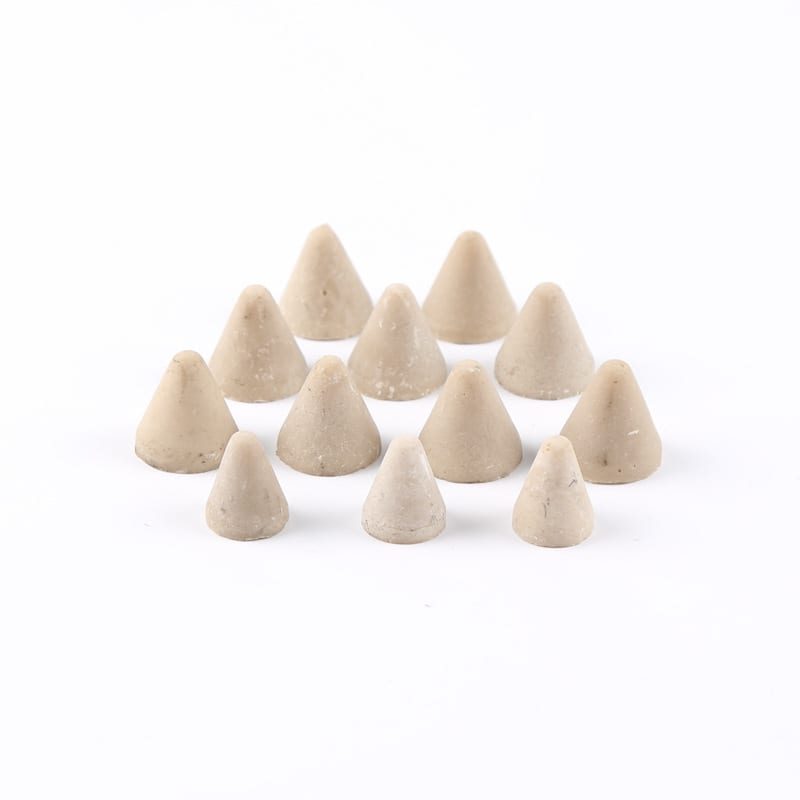
Oxygen- or nitrogen-cut mild steel plates, hot-forged levers, and thick stamped brackets carry hard heat-affected oxide dross and heavy sheared rollover burrs. Fast-cut ceramic tumbling media for steel uses a slightly softer vitrified bond packed with sharp aluminum-oxide grit: as outer grains dull against hard steel scale, controlled bond erosion sheds spent particles cleanly to expose fresh cutting crystals continuously.
Medium-Cut Durable Bonds for Precision Gears & Machined Alloy Shafts
CNC-turned 4140 alloy shafts, transmission gears, and precision hydraulic sleeves already hold tight dimensional tolerances and carry lighter wire burrs. Medium-cut ceramic media balances steady burr shear with longer stone life and smoother isotropic matte finish—protecting gear tooth profiles from excessive stock loss.
Stepping Into Dense High-Alumina Porcelain for Burnishing & Pre-Plate Smoothness
When steel components need bright pre-plate reflectivity or low-friction smoothness after primary deburring, dense non-abrasive high-alumina spheres and cylinders replace cutting ceramics, burnishing micro-peaks flat cleanly with JTJ60 or JTJ50 tumbling compounds.
| Steel Part & Alloy Family | Incoming Surface / Burr Condition | Recommended Ceramic Tumbling Media for Steel | SurfacePolish Machine & Chemistry | Target Exit Result |
|---|---|---|---|---|
| Mild & carbon steel stampings | Sharp sheared burrs & die rollover | Fast-cut or medium ceramic triangles | ZL bowl + LC10 + 35A/70A dry |
Clean radiused edges, rust-free matte |
| Laser-cut structural plates | Hard thermal oxide dross & sharp edges | Fast-cut ceramic triangles / cylinders | ZL / L1500 + MC8 purge + LC10 |
Scale-free clean metallic edges |
Hardened 4140 gears & shafts |
Fine CNC wire burrs & hobbing cusps | Medium-cut angle-cut cylinders | L1500 divided / OBD-LLF120 + LC10 |
Controlled edge break, intact teeth |
| Cast iron brackets & housings | Sand scale & parting-line flash | Fast-cut heavy ceramic triangles | ZL / L1800 + MC8 then LC10 + inhibitor |
Smooth matte ready for primer/paint |
| Pre-plate steel hardware | Leveled matte needing bright luster | High-alumina spheres / fine porcelain |
OBD-LX100B / LLF120 + JTJ60 |
Bright burnished finish for plating |
Choosing Angle-Cut Triangles, Cylinders & Geometry for Steel Parts
Stone shape controls where ceramic tumbling media for steel can reach—and whether stones bridge safely over slots or jam tightly inside mounting holes.

22° and 45° Angle-Cut Triangles for Internal Corners & Bracket Bends
Flat-cut equilateral triangles slide cleanly across stamped gussets and flat flanges, yet their flat faces can occasionally stick against smooth washers or miss tight acute bends. Angle-cut ceramic triangles expose sharp beveled tips that reach deep into 90° bracket folds, gear root fillets, and louver corners without flat-on-flat sticking.
Angle-Cut Cylinders for Heavy Impact Durability & Slot Bridging
Under high-energy OBD-LX100B centrifugal disc or OBD-LLF120 planetary barrel loads, thin triangle tips can chip against hardened alloy gears. Angle-cut ceramic cylinders pack robust cross-sectional strength with angled slicing faces that bridge cleanly across keyways and narrow bolt slots.
Enforcing Non-Lodging Sizing Rules Across Holes & Keyways
Before charging any steel deburring bowl, measure every tapped hole, slot, and lightening cutout against proven non-lodging media sizing geometry. Proper sizing eliminates manual stone picking completely at the separation deck.
Preventing Ceramic Media Glazing on Oily & Scaled Steel Parts
The number-one productivity killer in steel tumbling is stone glazing—when stones turn slick, dark, and shiny while burrs stop shrinking.

Degreasing Press Oil & Cutting Fluids in Ultrasonic Cleaner Baths
Stamped steel brackets and CNC-turned alloy gears arrive coated in heavy drawing oils and sulfurized cutting coolants. Dumping oily blanks straight into a ZL bowl coats ceramic tumbling media for steel pores in waterproof grease within minutes. Pre-washing oily steel in an ultrasonic cleaner bath keeps stone pores crisp and free-cutting.
Running LC10 Flow-Through Dosing & MC8 Oxide Descaling Purges
Recirculating muddy iron-oxide slurry inside a closed vibratory bowl cements worn iron fines directly into ceramic pores. Meter fresh LC10 deburring compound continuously via peristaltic pump into steady flow-through water—and run a periodic MC8 acid descaling purge whenever heavy laser scale or rust glazes the bed.
Auditing Water Hardness & Foam Control in Ferrous Bowls
Seasonal spikes in municipal water hardness react with LC10 surfactants to form dull soap film over ceramic stones, while ultra-soft water can whip up thick foam blankets that cushion cutting shear. Monitor water hardness in mass finishing regularly to keep cut rates steady.
Stopping Flash Rust After Wet Ceramic Deburring on Steel
Cleanly cut carbon steel and cast iron flash-rust rapidly the moment they leave wet ceramic tumbling media for steel unless rinsing and drying happen immediately.
Neutralizing MC8 & Applying Oil-Free Inhibitor Rinses
After LC10 cutting or MC8 descaling, flush steel parts thoroughly with clean fresh water—optionally adding buffered HM3 or water-soluble rust-inhibitor rinse chemistry—so zero acidic residue stays trapped inside blind threads.
Spinning Bone-Dry Immediately in 35A / 70A Centrifugal Dryers
Transfer rinsed steel parts straight off the separation chute into a heated 35A or 70A centrifugal spin dryer to strip capillary water from tapped holes in seconds, optionally following with heated corncob (8#-80#) drying for deeply pocketed stampings.
Segregating Carbon Steel Bowls from Aluminum & Stainless Lines
Never reuse ceramic tumbling media for steel on 6061 aluminum or 304 stainless hardware—and keep steel-only 35A/70A dryer baskets separate—so embedded iron dust never causes galvanic rust spotting on non-ferrous parts.
Screening, Replenishment & Separation Deck Discipline
Consistent steel deburring depends on keeping stone size uniform and media-to-part volume ratio high enough to prevent part-on-part nicking.
Scheduling Media Screening to Cull Undersized Worn Slivers
As fast-cut ceramic triangles wear down across shifts, tiny worn fragments become lodging hazards inside gear teeth and bolt holes while dropping total media bed depth. Follow scheduled media screening and replenishment to keep cushioning volume constant and cull worn slivers cleanly.
Matching Separation Screen Apertures to Steel Part Width
Verify that your ZL internal flapper deck or external two-deck screener retains your narrowest steel stamping cleanly while letting worn undersized stones drop straight back into the bowl or cull bin.
Selecting Between ZL Bowls, L1500 Divided Troughs & OBD-LLF120
Compact stampings and fasteners run fastest in ZL separator bowls or OBD-LX100B centrifugal discs, long alloy shafts and structural rails thrive inside divided L1300–L1800 straight troughs, and precision hardened gears achieve zero-nick isotropic finishing inside OBD-LLF120 planetary barrels. Compare barrel finishing process and isotropic finishing workflows for multi-stage steel cells.
| Steel Ceramic Media Symptom | Probable Floor Cause | Fast Corrective Action | Preventive Standard |
|---|---|---|---|
| Stones glazed dark; burrs untouched | Oily blanks or heavy oxide scale | Ultrasonic pre-wash + MC8 stone purge |
Enforce flow-through LC10 dosing |
| Crescent dings on gear teeth/flats | Low media-to-part volume ratio |
Top up ceramic bed; use divided trough | Lock max batch weight per chamber |
| Stones wedged inside bolt holes | Undersized stone or worn slivers | Screen out fines; resize via non-lodging | Audit min hole vs. media dimensions |
| Orange flash rust after unloading | Damp hold or un-neutralized MC8 |
Clean rinse + inhibitor + 35A/70A dry |
Spin dry immediately off separator |
Quality Verification, Cost-Per-Part Control & Multi-Stage Progression
Measuring ceramic tumbling media for steel value means tracking cycle time, media wear rate, and zero-defect part acceptance together.
Auditing First-Article Edge Radius & Roughness Targets
Check first-article steel stampings and machined gears against surface finish conversion chart roughness targets and optical edge gauges before authorizing full-shift runs.
Pairing Ceramic Media Bowls with OBD Magnetic Internal Cleaning
When steel hydraulic manifolds carry deep blind cross-holes where ceramic triangles cannot reach, follow external ZL deburring with a brief OBD-60 or OBD-100 magnetic polishing machine pass (HM3) to clear internal burrs cleanly.
Why Resin Plastic Media & Walnut Shell (8#-80#) Don't Replace Ceramic on Steel
Resin plastic media wears out far too fast against hard steel burrs, while dry walnut shell (8#-80#) and corncob lack cutting density altogether—reserve organic media strictly for final dry luster or moisture absorption after ceramic cutting.
Troubleshooting Steel Deburring Drift, Wear & Separation Carryover
Keeping ceramic tumbling media for steel cutting predictably across shifts means catching stone glazing, rapid attrition, and screen wear early.
Diagnosing Slow Burr Removal on Work-Hardened Steel Stampings
When stamped brackets exit a ZL bowl with rolled-over burrs still intact, either the ceramic bond is too hard and non-friable for smooth self-sharpening or LC10 flow-through water is starved. Switch to a sharper fast-cut ceramic grade, verify MC8 descaling if scale is present, and restore steady peristaltic LC10 flow.
Fixing Unexpected Ceramic Carryover into 35A/70A Dryer Baskets
If worn ceramic triangles ride off the separation deck into finished steel totes, stones have worn down below screen aperture tolerances or the pneumatic flapper gate is leaking. Screen out undersized stones, inspect gate seals, and top up the bowl with fresh media.
Preventing Crescent Impact Nicks on Heavy Forged Steel Brackets
Heavy steel forgings bruise each other when batch loads exceed safe media-to-part volume ratio. Lower part load weight per cycle, raise ceramic fill height, or move heavy bars into divided L1500 straight-trough lanes.
Auditing Polyurethane Bowl Liners & Drain Plugs Weekly
Heavy steel and ceramic charges wear bowl polyurethane ribs faster than light aluminum jobs; weekly liner and drain-screen checks protect steel tub shells from premature wear.
Multi-Shift Media Management, Hoppers & Cost Optimization
Managing ceramic tumbling media for steel systematically lowers total cost per finished part while protecting downstream equipment.
Staging Wheeled Media Hoppers for Fast Alloy & Grade Swaps
Using labeled wheeled hoppers for fast-cut steel triangles, medium-cut angle-cut cylinders, and high-alumina burnishing spheres lets shops change recipes cleanly without mixing grades.
Tracking Stone Consumption Rates & Settling-Tank Cleanouts
Logging weekly ceramic top-up weights alongside multi-baffle settling tank cleanouts keeps bowl performance transparent and prevents porcelain-slurry buildup in shop drains.
Coordinating Upstream CNC Burr Minimization with Mass Finishing
Working with CNC and stamping engineers to keep incoming wire burrs consistent lets ceramic tumbling media for steel hit target edge radii in shorter, lower-cost cycles.
Validating First-Article Roughness & Edge Radii Before Full Release
Measure first-article gears, shafts, and brackets against surface finish conversion chart targets before running full multi-shift batches.
Balancing Stock Removal Rate, Edge Radius & Media Life on Steel Lines
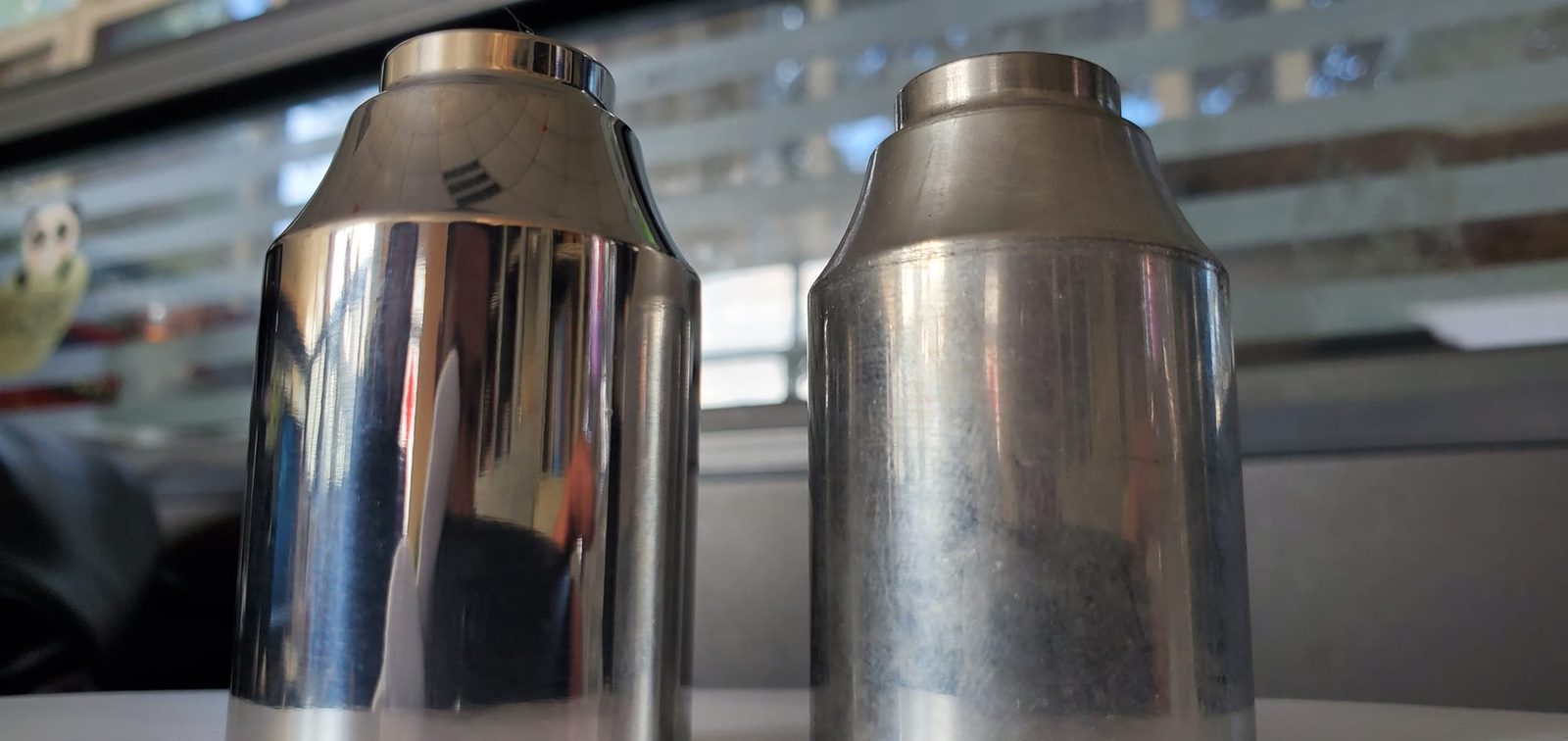
Choosing the optimal ceramic tumbling media for steel is always an engineering trade-off between cutting speed, stone attrition rate, and exit surface roughness. Fast-cut friable ceramic triangles strip heavy laser-cut oxide dross and thick stamping burrs rapidly inside ZL bowls and L1500 straight troughs, whereas tougher medium-cut angle-cut cylinders preserve gear tooth profiles and deliver longer wear life under high-energy OBD-LX100B disc or OBD-LLF120 planetary loads. Stepping downstream into dense high-alumina spheres with JTJ60 or JTJ50 refines leveled steel into bright pre-plate smoothness cleanly.
Documenting Non-Lodging Geometry, Peristaltic Dosing & Dryer Handoffs
Mapping every tapped hole, keyway, and slot against non-lodging media sizing rules before loading steel batches eliminates manual stone picking, while calibrated LC10 peristaltic dosing and periodic MC8 descaling purges prevent stone glazing. Pairing scheduled media screening and replenishment with immediate 35A/70A heated spin drying locks in repeatable, rust-free steel finishing across every shift.
Managing Media-to-Part Volume Ratio for Heavy Steel Forgings & Gears
Heavy forged steel levers, thick laser-cut brackets, and hardened transmission gears carry high kinetic energy inside ZL bowls and L1500 troughs. Dropping media-to-part volume ratio too low lets adjacent steel parts slam together, trading sharp burrs for crescent impact dings along gear teeth and sealing flats. Maintaining generous ceramic tumbling media for steel bed depth—or installing polyurethane lane dividers inside L1300–L1800 straight troughs—keeps every workpiece cushioned throughout the cycle.
Matching LC10, JTJ20 & MC8 Chemistry to Incoming Steel Mill Scale
Hot-rolled steel blanks and heat-treated alloy forgings carry stubborn black mill scale that quickly glazes neutral soaps. Running an initial MC8 descaling pass strips brittle oxide cleanly before switching to LC10 (general steel deburr) or JTJ20 (heavy rough cut) so ceramic stones cut directly into clean base metal.
Extending Stone Service Life Across High-G LLB50 & OBD-LLF120 Units
High-energy centrifugal discs and OBD-LLF120 planetary barrels multiply sliding shear pressure across ceramic tumbling media for steel, wearing soft fast-cut stones rapidly. Choosing durable medium-cut vitrified ceramic or dense high-alumina grades for high-G platforms keeps slurry clean and reduces media top-up frequency.
Auditing First-Article Edge Break & Coating Adhesion Downstream
Before releasing deburred carbon steel or alloy gears to powder coating, black oxide, or heat treatment, verify uniform edge radii and spotless 35A/70A drying against surface finish conversion chart standards.
Coordinating Multi-Stage Steel Finishing: Rough Cut to Pre-Plate Burnish
High-specification steel gears, hydraulic spools, and architectural brackets often pair aggressive ceramic tumbling media for steel (LC10 or JTJ20) in stage one with smooth high-alumina spheres (JTJ60 or JTJ50) in stage two. Separating rough burr shear from final peak burnishing extends stone life, keeps slurry cleaner, and achieves tight isotropic smoothness cleanly.
Auditing Bowl Liner Thickness, Drain Screens & Settling Baffles
Because dense sintered ceramic triangles wear polyurethane bowl ribs and perforated drain screens steadily, weekly visual liner checks and multi-baffle settling-tank cleanouts protect equipment longevity and prevent porcelain-slurry drain clogs across shifts.
Validating Repeatable Edge Break & Rust-Free Drying on First-Article Lots
Inspecting first-article steel stampings and machined gears for uniform edge radius, zero wedged media, and spotless 35A/70A centrifugal drying guarantees consistent batch quality from startup through late-shift runs.
Calculating Total Cost per Finished Steel Part Across Ceramic Grades
Comparing ceramic tumbling media for steel by bag weight alone misleads buyers when cheap low-alumina stones crumble into thick mud and double cycle times. Evaluating stone attrition rate, cycle speed, and media-to-part volume ratio stability together shows why matched SurfacePolish ceramic media and high-alumina grades lower total finishing cost per accepted steel component.
Coordinating Preventive Maintenance on High-Load Steel Finishing Bowls
Weekly inspections of eccentric drive lubrication, polyurethane chamber ribs, pneumatic separation gate seals, and LC10/MC8 peristaltic tubing keep heavy steel deburring bowls running smoothly without unplanned downtime across peak production quarters.
Standardizing Operator Training on Media Screening & Glaze Prevention
Training finishing operators to recognize early ceramic stone glazing, verify LC10 peristaltic pump drip rates, and run scheduled media screening keeps steel deburring lines fast, predictable, and free of slot lodging across every shift.
Integrating Ultrasonic Pre-Clean & Spin-Dry Transfers Around Steel Bowls
Pairing ultrasonic cleaner degreasing upstream with immediate 35A/70A centrifugal spin drying downstream keeps ceramic tumbling media for steel clean and prevents flash rust on finished carbon steel parts.
Consistent dosing, clean media screening, dedicated alloy isolation, and prompt heated drying keep every production shift predictable, economical, and free of avoidable surface defects across high-mix industrial finishing lines.
Documenting first-article setup parameters, verifying non-lodging media geometry, maintaining calibrated flow-through compound delivery, and enforcing prompt heated centrifugal drying ensure reliable, repeatable quality across every production lot and alloy family.
SurfacePolish Ceramic Media Supply, Certifications & Free Steel Trials
SurfacePolish (Xiamen Jin Tai Jin Grinding Technology Co.,Ltd.) supplies engineered ceramic tumbling media for steel (ceramic media catalog) alongside 21 machine platforms—covering ZL/ZXL vibratory bowls, L1300–L1800 straight troughs, LLB50/LLF120 centrifugal units, OBD-30 to OBD-100 magnetic polishers, rotary barrel tumbler lines, 35A/70A dryers, and ultrasonic cleaner stations—backed by 200,000+ practical finishing solutions.
Certified Manufacturing Quality & Single-Source Compatibility
All equipment is manufactured under ISO 00726Q01571R001 quality management alongside CE M.2023.206.C88121 and CE M.2023.206.C88120 certifications and 24 granted Chinese IP rights, ensuring seamless compatibility across ceramic grades, machines, and LC10/MC8/HM3/JTJ60 compounds.
Send Raw Steel Stampings or Gears for Free Ceramic Media Trials
Ship your raw carbon steel brackets, laser-cut plates, or hardened alloy gears to our engineering lab for complimentary trials. We optimize bond hardness, angle-cut geometry, non-lodging sizing, and rust-free drying before you order.
 +86-592-2381506


 Rete IPv6 supportata